
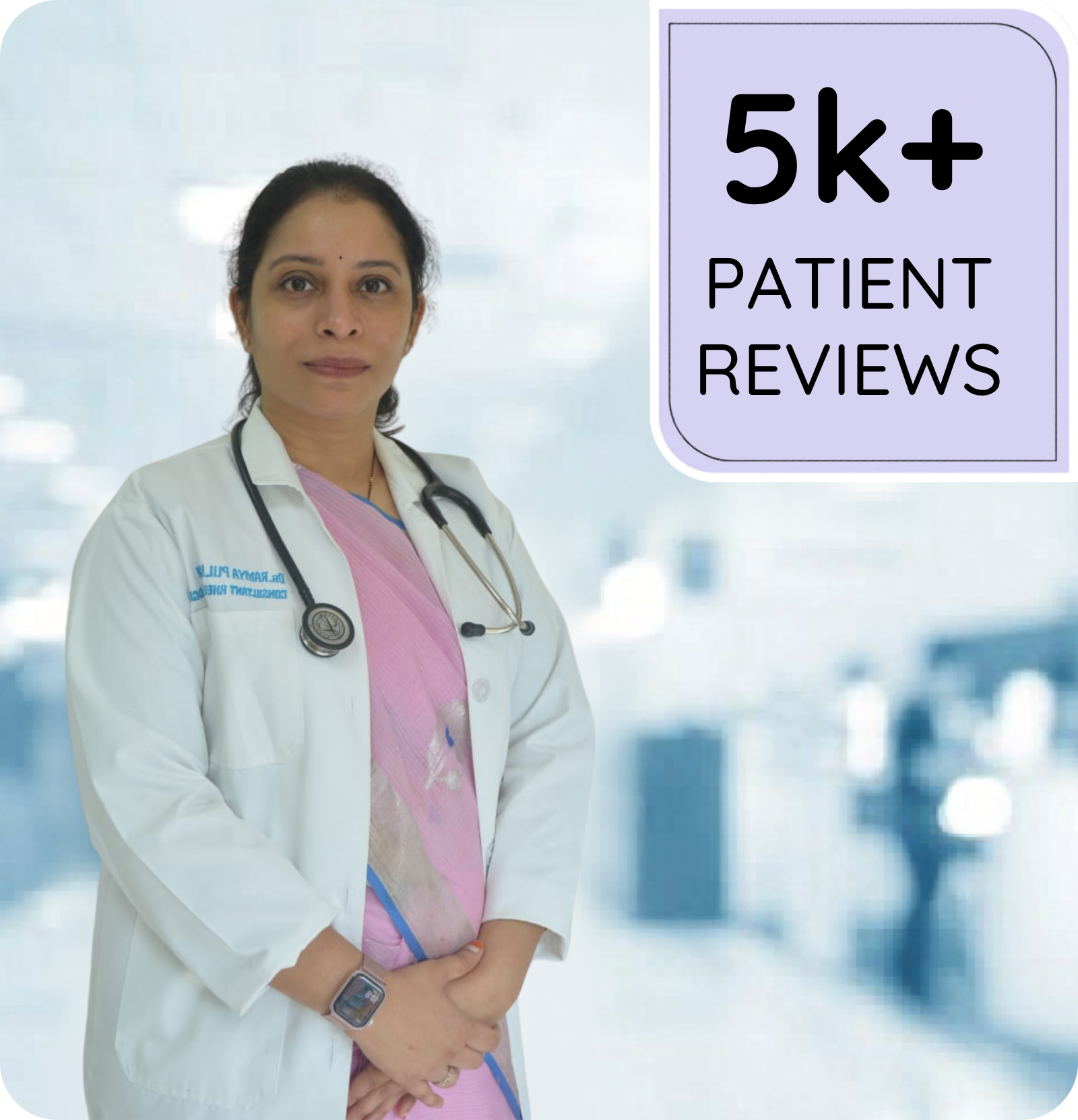
About Dr. Ramya Reddy Puligari
Dr. Ramya Reddy is a Consultant Rheumatologist with specialised clinical experience in the diagnosis and management of Autoimmune, Connective tissue, and Musculoskeletal diseases. Her expertise with more than Seven years spans the full spectrum of inflammatory and systemic rheumatic conditions, including Rheumatoid Arthritis, Systemic Lupus Erythematosus (SLE), Sjogren’s Disease, Systemic Sclerosis, Mixed Connective Tissue Disease (MCTD), and Psoriatic Arthritis, Ankylosing Spondylitis, Vasculitis, Gout, Ocular Immunology.
Dr. Ramya holds specialised proficiency in Nail Fold Videocapillaroscopy (NVC) — an advanced, non-invasive diagnostic technique used to evaluate microvascular abnormalities in connective tissue diseases such as Systemic Sclerosis and MCTD. This expertise enables earlier, more precise diagnosis and better disease monitoring for patients with complex autoimmune presentations . She also has expertise in Musculoskeletal Ultrasound , Ultrasound Guided Joint Injections.
With a patient-first approach, Dr. Ramya integrates current evidence-based research into clinical practice, ensuring each patient receives a precise diagnosis, a personalised treatment plan, and the education needed to understand their condition. Her care philosophy is built on transparency, empathy, and long-term disease management — not just symptom relief.
Beyond the clinic, Dr. Ramya Reddy actively disseminates clinically accurate, peer-reviewed rheumatology and immunology content in both Telugu and English — addressing disease pathophysiology, diagnostic criteria, treatment protocols, and emerging therapeutic advances in autoimmune and musculoskeletal disorders.
Qualifications

MD – Internal Medicine

Fellowship in Rheumatology – KIMS

MRCP SCE – Rheumatology

Inflammatory Arthritis

Connective Tissue Diseases
Crystal Arthropathies

Vasculitis

Bone & Degenerative Disorders

Other Rheumatological Conditions
Our Care Approach
comprehensive . Compassionate . Continuous
Research & Academic Contributions
Advancing Knowledge. Improving Lives.
Dr. Ramya Reddy is committed to advancing rheumatology through
research, academic presentations, and clinical collaborations.

2+
Peer-Reviewed Publications
Published in leading rheumatology journals, including Annals of the Rheumatic Diseases.

4+
International Presentations
EULAR 2022, EULAR 2026, ACR Convergence and APLAR presentations.

2 Years
Clinical Research
Participated in Rheumatology Drug Trials at KIMS Hospitals, Secunderabad (2021–2023)

Academic Excellence
Regular participant in national and international rheumatology conferences.
Academic Journey & Presentations

2017
Poster Presentation
Rare Presentation of Sturge-Weber Syndrome
TS-APICON, Hyderabad

2018
Paper Presentation
Case Series of Alcohol Withdrawal Seizures
TS-APICON, Nizamabad

2022
Oral Presentation
Case Report Presentation ACR Convergence 2022, Global Myositis Summit, Pennsylvania, USA

2022
Poster Presentations
Case Report on VEXAS Syndrome & MDA5 Dermatomyositis, 10 Patient Case Series APLAR

2022
EULAR Presentation
Presented Research Work at EULAR 2022

2026
EULAR Presentation
Presented Research Work at EULAR 2022

Frequently Asked Questions (FAQ)
What is the difference between Rheumatoid Arthritis and Osteoarthritis?
Rheumatoid Arthritis (RA) is an autoimmune disease where the immune system attacks the joints, causing inflammation, pain, stiffness, and potential joint damage. It commonly affects joints on both sides of the body.
Osteoarthritis (OA) is a degenerative joint condition caused by the gradual wear and tear of cartilage. It typically affects weight-bearing joints such as the knees, hips, and spine.
The key difference is that RA is driven by the immune system, while OA results from joint degeneration. Accurate diagnosis is important because treatment approaches differ significantly.
How should I prepare for my first rheumatology consultation?
To make the most of your appointment, bring:
- Previous medical records, blood tests, X-rays, MRI scans, or reports
- A list of current medications and supplements
- Details about your symptoms, including when they started and which joints are affected
- Relevant family history of autoimmune or rheumatic diseases
- Any questions you would like to discuss
Your consultation will typically include a detailed medical history, physical examination, and recommendations for further investigations if required.
What tests are commonly used to diagnose autoimmune diseases?
Diagnosis often involves a combination of clinical evaluation, blood tests, and imaging studies.
Common tests may include:
- ANA (Antinuclear Antibody)
- Rheumatoid Factor (RF)
- Anti-CCP Antibody
- ESR and CRP (Inflammation Markers)
- CBC, Liver Function, and Kidney Function Tests
- Disease-specific antibody testing when indicated
Imaging studies such as X-rays, Musculoskeletal Ultrasound, or MRI may also be recommended depending on symptoms and suspected diagnosis.
Can I continue working and exercising with a rheumatic condition?
Yes. Most patients can continue working and staying active with appropriate treatment and disease management.
Regular low-impact exercises such as walking, swimming, yoga, and cycling help improve joint flexibility, strength, and overall wellbeing. Work adjustments, ergonomic support, and activity modifications may be helpful during disease flares.
A personalized treatment and rehabilitation plan can help you maintain an active and productive lifestyle.